

QR Code Blurry? Fix Blurred QR Codes
Upload or paste (⌘V / Ctrl+V) any blur or damaged QR code — automatically deblur, decode, and rebuild a crystal-clear copy.
Upload a blurry QR code to see the restored result
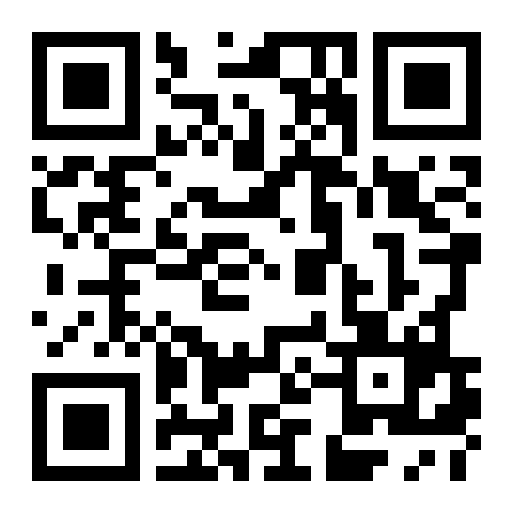
Restored QR Code Result
Upload a blurry QR code to see the restored result
Restored QR Code Result
Upload a blurry QR code to see the restored result
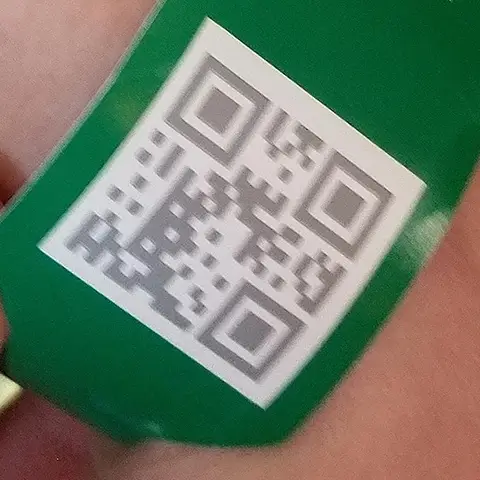
Restoration Effect Comparison
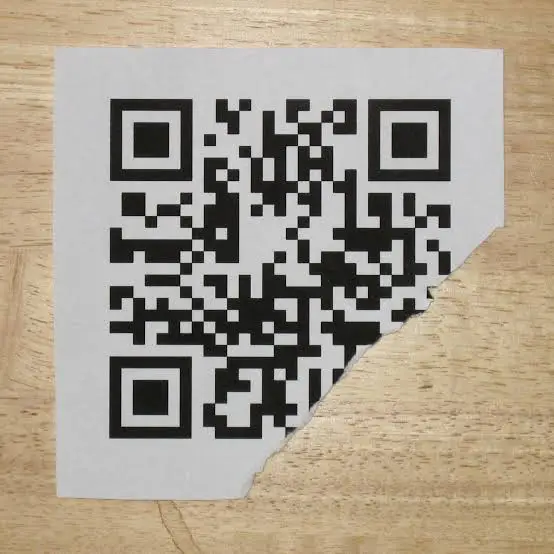
Real QR codes blurred from blurry photos, screen glare, torn corners, and angled surfaces restored to 100% clean scannability.


Why Blurry QR Codes Fail & How Advanced Computer Vision Solves It
A detailed technical guide to optical blur, specular reflections, occluded position patterns, and perspective rectification in barcode reconstruction.
1. Optical Defocus Blur & Point Spread Function (PSF)
When a smartphone camera focuses on the background instead of a nearby QR code, each point of light is smeared into an airy disc or blur circle (Point Spread Function). In high-density QR codes (Version 5 and above), modules are only a few pixels wide. Blur causes adjacent black and white cells to average into a uniform gray field, eliminating the binary transitions needed by standard binarizers like Bradley or Sauvola. Our pipeline models the optical blur kernel and applies iterative blind deconvolution to recover original edge definitions before re-quantizing each module.
2. Specular Highlights & LCD Moiré Interference
Capturing codes displayed on monitors, mobile screens, or laminated passes frequently introduces specular glare and optical aliasing. When the camera sensor array beats against the LCD subpixel matrix, high-contrast wavy bands (Moiré fringes) superimpose onto the barcode. Camera sensors clip specular highlights to pure white (RGB 255, 255, 255), destroying all underlying data modules. We apply localized dynamic range expansion and notch filtering in the 2D frequency domain to filter out high-frequency screen grids, restoring contrast to washed-out data zones.
3. Finder Pattern Occlusion & Reed-Solomon Limits
Every standard ISO/IEC 18004 QR code relies on three nested square Finder Patterns located in the corners to establish coordinates, tilt, and version size. If even one finder pattern is torn, smeared, or cut off, off-the-shelf scanner libraries (like ZXing or iOS AVFoundation) fail to register the code entirely, even if 95% of the payload data is pristine. QSharpener identifies residual alignment patterns and timing tracks to digitally reconstruct missing position markers, allowing the built-in Reed-Solomon error correction codes (ECC Level L: 7%, M: 15%, Q: 25%, H: 30%) to mathematically restore damaged payload words.
4. Non-Affine Perspective Distortion & Homography
When a QR code is photographed at an oblique angle or on curved packaging (like bottles or food containers), the perspective transformation is non-affine. Modules near the camera appear significantly larger than modules farther away, and parallel grid lines converge toward vanishing points. Regular image upscalers sharpen blurred pixels without correcting geometric coordinates, leaving the code unreadable. QSharpener detects boundary quadrilaterals and computes a four-point projective planar homography matrix, warping the distorted surface back into a flat, mathematically square grid before module extraction.
Everything You Need to Know About Restoring Blurry QR Codes
Answers to common questions regarding restoration mechanics, pricing credits, and vector exports.